Amnuay Kesbumrung, Muay Thai Legend and Rangsit Stadium Visionary, Passes Away
The Muay Thai community mourns the loss of a historical figure. Amnuay Kesbumrung, owner and director of the traditional Rangsit International Boxing Stadium, died in 2026.
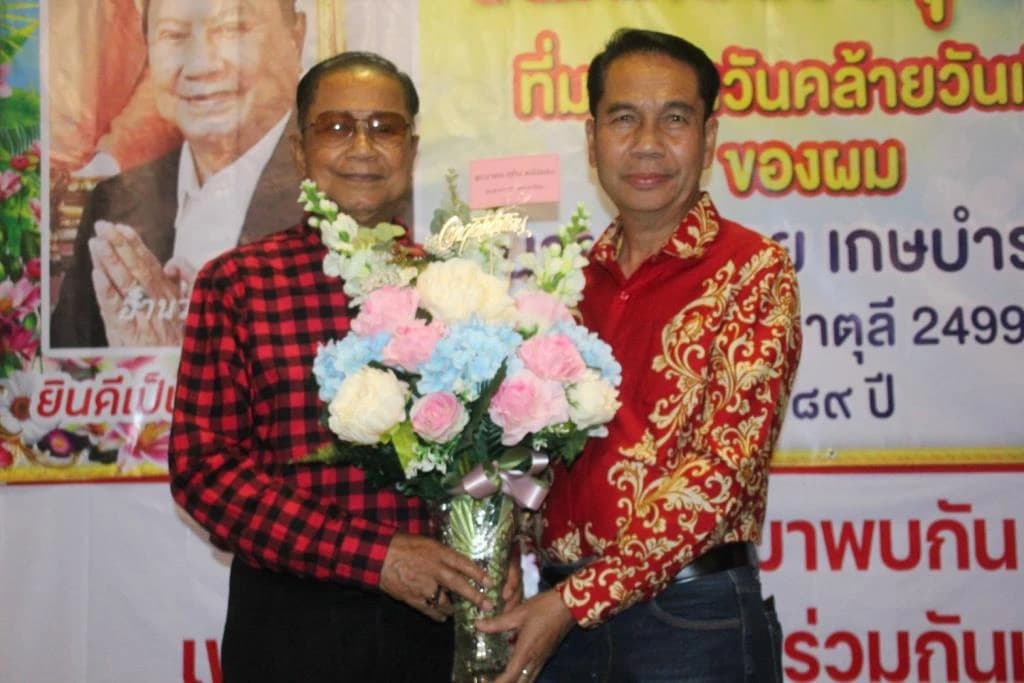
The Muay Thai community mourns the loss of a historical figure. Amnuay Kesbumrung (อำนวย เกษบำรุง), owner and director of the traditional Rangsit International Boxing Stadium, passed away in 2026. Born in 1935, Amnuay experienced different eras of the Thai sport, first as a fighter and later as a coach, promoter, and administrator.
The news of his death was shared in a tribute published by the Muaythai Iyarin family. In the message, Amnuay is described as a mentor, father, and a true legend of Muay Thai, someone who worked to bring the sport to the international stage while ensuring it retained its Thai roots.
His documented journey, as reported by sources from Thailand, highlights his significant impact.
From Suphan Buri to the Rings
Amnuay was born in the Sam Chuk district of Suphan Buri province in 1935. According to the biography maintained by the Muay Thai Institute of Rangsit, he studied automotive mechanics at the renowned Pathumwan Technical School and officially entered the fighting world in 1956, joining the Lukmatuli team.
In the ring, he became known as Auechai Lukmatuli (อวยชัย ลูกมาตุลี).
In a lengthy interview published in 2025, when he was around 91 years old, Amnuay shared that his connection to fighting began much earlier. According to his own account, he started fighting as a child, around the age of eight, and later trained at the Lukmatuli Gym, which was affiliated with the military.
Amnuay estimated that he competed in hundreds of bouts in both Muay Thai and Western boxing throughout his youth. The publication records over 400 fights in his career.
However, it would be outside the ropes that he would build his most enduring legacy.
The Man Behind Rangsit Stadium
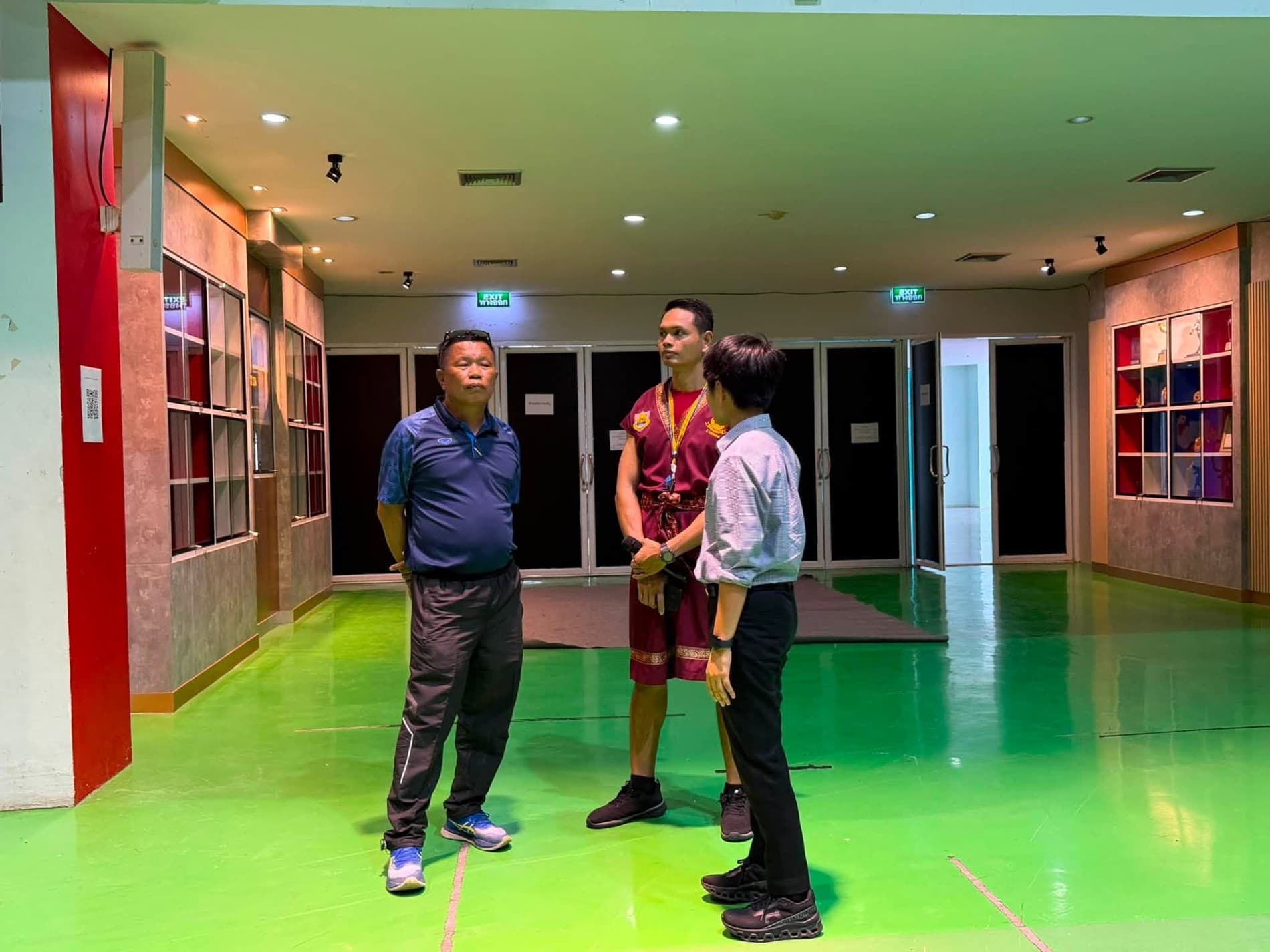
Amnuay's story is intertwined with that of the Rangsit Stadium in Pathum Thani.
According to the stadium's official history, the arena was established in 1962 at the initiative of then-governor of Pathum Thani, Prasit U-rairat, as a way to promote Muay Thai in the province. Initially, the project struggled to attract an audience.
At that time, Amnuay already operated training camps and had his own fighters. He saw a different opportunity: to feature athletes connected to local factories in events, drawing in their coworkers and fans.
The strategy worked.
According to the historical record of Rangsit Stadium, one of the first events generated over 6,400 baht in ticket sales with costs under 3,000 baht. As the audience grew, Amnuay gained prominence in promoting the events.
Still in 1962, he won the bid to take over the stadium, paying approximately 20,000 baht.
This marked the beginning of a relationship that would span over six decades.
A Stadium That Changed Locations Several Times
The Rangsit Stadium that exists today was not the first arena managed by Amnuay.
The Thai historical record of the stadium notes a nearly nomadic trajectory. The arena initially operated near the Rangsit market and the Khlong Rangsit. In 1966, it moved again; later, it was located near the Rangsit water supply station, and in the 1970s, it returned to the market area.
The major change occurred when Amnuay decided to stop relying on rented properties.
He purchased a plot of just over seven rai — approximately 11,000 square meters — on Phahonyothin Road to build a permanent arena.
The new Rangsit Stadium, a much more modern structure built of concrete, was officially inaugurated on December 26, 1985.
In the following decades, the venue became one of the traditional addresses in Thailand's fight circuit.
A retrospective report on Amnuay estimates that over 80,000 fights had taken place at Rangsit Stadium by 2010, highlighting the scale of the project he initiated decades earlier.
More Than Just a Promoter
Amnuay's contributions extended beyond organizing events.
When Thailand began to more formally structure the international expansion of Muay Thai, he also participated in the process of standardizing the teaching of the sport.
The history of the Muay Thai Institute records that, following the creation of the World Muaythai Council, international representatives advocated for the establishment of a school in Thailand capable of teaching the martial art using a structured methodology.
Amnuay was directly involved in this process, working on the school's registration with the Ministry of Education and developing a Muay Thai curriculum. The institution received official authorization on June 26, 1997.
This initiative was particularly important at the time: as Muay Thai spread globally, Thai officials expressed concern about the possibility of the sport being taught abroad without adequately preserving its techniques, traditions, and cultural values.
Thus, Amnuay became not only a businessman in the sport but also one of its guardians for future generations.
Recognition Within Thai Muay Thai
Even in his advanced age, Amnuay remained active in the country's sporting life.
In December 2023, Thai media reported a celebration at Rangsit International Stadium for his birthday. The event brought together officials, former fighters, and dignitaries, including the then Minister of Defense of Thailand, Sutin Klungsang.
On this occasion, Amnuay was recognized not only as the director of Rangsit Stadium but also as the president of a project aimed at developing athletes and enhancing the international profile of Muay Thai.
The following year, another birthday celebration once again gathered historic figures from the sport at Rangsit Stadium.
In 2024, the Thai newspaper Daily News also noted Amnuay as president of a foundation for former boxers, director of Rangsit International Boxing Stadium, and president of an event organization held at the arena.
This demonstrated a rare aspect of his journey: even after turning 90, he remained directly connected to the sport to which he had dedicated most of his life.
A Life Spanning Generations
Amnuay Kesbumrung belonged to a generation that predated the transformation of Muay Thai into a global phenomenon.
He witnessed a Thailand where purses were small, gyms had simple structures, and events heavily relied on local communities. Decades later, he saw the same sport gain gyms in the United States, Europe, Latin America, and virtually every region of the world.
In an interview, he summarized his ambition for the sport simply: he wanted Muay Thai to become truly international. As early as 2007, a report by Smithsonian at the Rangsit institute recorded Amnuay stating that his goal was to transform Muay Thai into an international sport comparable in reach to football.
At the same time, his efforts remained deeply tied to the idea that this expansion should preserve the Thai identity of the sport.
This aspect is precisely what is reflected in the farewell published by the Muaythai Iyarin family: the image of a man who helped take Muay Thai beyond Thailand but spent his life advocating for its roots to remain in the country where the art was born.
From fighter to teacher; from gym owner to promoter; from stadium director to participant in the international structuring of the sport, Amnuay Kesbumrung leaves a legacy that accompanies much of the modern history of Muay Thai.
The Rangsit Stadium remains one of the most concrete expressions of this legacy.
Amnuay Kesbumrung (1935–2026).
Muay Thai Expert — independent editorial. Affiliate links on product pages are disclosed.